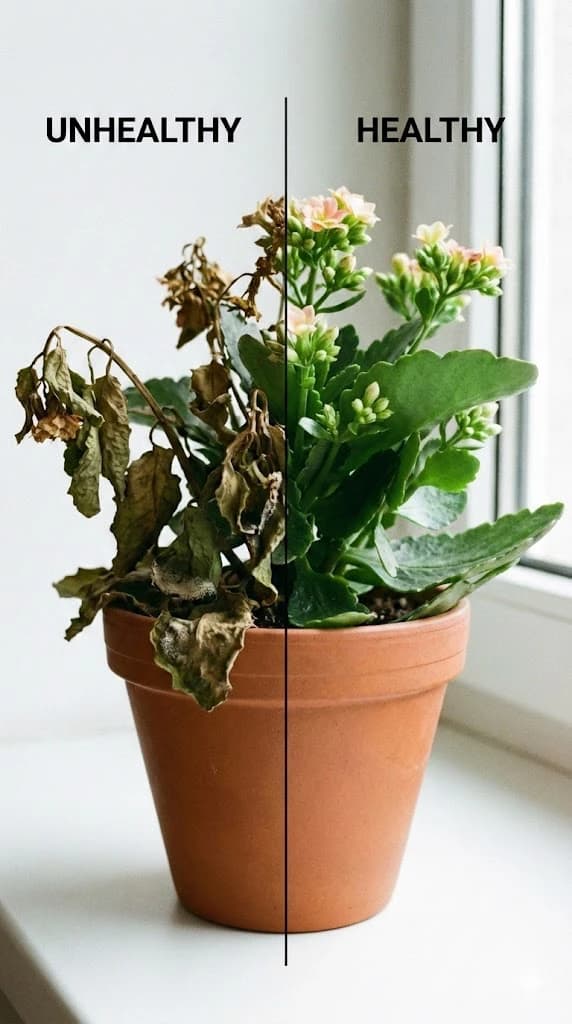
Plant symptoms can have several causes, and early detection does not guarantee an easy cure. Review the growing conditions and plant history before choosing a treatment. Penn State Extension explains why pests and diseases are only some possible causes: Diagnosing Poor Plant Health (https://extension.psu.edu/diagnosing-poor-plant-health).
Fungal leaf spots can appear brown or black, sometimes with a yellow halo. Powdery mildew can cause a gray-white coating and distorted growth. These signs need assessment alongside the plant’s condition; wiping leaves alone is not a reliable treatment plan. See Penn State Extension, Pest and Disease Problems of Indoor Plants (https://extension.psu.edu/pest-and-disease-problems-of-indoor-plants).
Begin with observation before treatment. Check whether damage is spreading, which leaves are affected first, whether the soil stays wet, and whether you can see insects, webbing, residue, or distorted new growth. Sun scorch, cold damage, fertilizer burn, root stress, and pests can resemble disease, so one symptom rarely proves a cause.
Isolate a plant with a potentially contagious problem and clean tools between plants. Remove severely damaged material only when the plant can tolerate the loss, and discard it away from healthy pots. Improve spacing and airflow, avoid leaving foliage wet overnight, and correct watering or drainage conditions that may have contributed.
Choose a treatment only after narrowing the cause. Follow the product label, test sprays on a small area, protect children and pets, and avoid combining products unless the label allows it. Repeatedly applying a broad treatment without correcting light, water, airflow, or quarantine conditions often leads to recurrence.
Track photos over several days under similar lighting. Stable old damage does not necessarily mean a treatment failed; the useful signs are whether new spots appear and whether new growth is healthy. If a valuable plant declines rapidly or the cause remains unclear, consult a local extension service, nursery, or qualified plant-health professional.
You can use Fylora’s AI plant doctor to explore possible causes from a photo. Treat its suggestions as a starting point, not a confirmed diagnosis or a guarantee that a treatment will work. Compare them with the plant’s history and the guidance above, and seek qualified advice if the problem persists or worsens.